
CIOReview APAC Weekly Brief
Be first to read the latest tech news, Industry Leader's Insights, and CIO interviews of medium and large enterprises exclusively from CIOReview APAC
A featured contribution from Leadership Perspectives: a curated forum reserved for leaders nominated by our subscribers and vetted by the CIOReview Advisory Board.

Indonesia
Rpa Implementation for Reduced Manpower Dependency
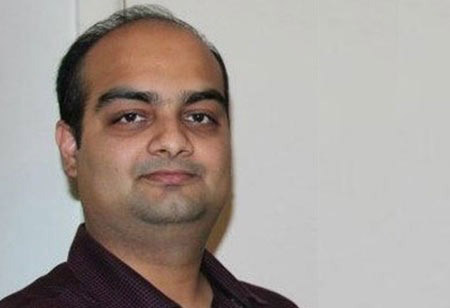
Anurag Mukherjee, a technology and digital transformation leader with over 18 years of experience in retail and e-commerce has overseen product and technology portfolios for various retail, e-commerce, and multichannel solutions. With significant knowledge of diverse technology stacks, he has worked across the globe in regions like India, MENA, ANZ, the US, and SEA. He is the Head of Digital Technology in PT Matahari Department Store Tbk, Indonesia, driving their digital, Omni channel, and O2O initiatives.
In an exclusive interview with CIO Review APAC, Mukherjee has given his valuable insights on robotic process automation (RPA) and its benefits in retail.
Could you shed some light on the RPA market space and its benefits?
RPA is an emerging and vastly unexplored market for end-users. Like every other technology, RPA will evolve in developed nations and industries, where it gets absorbed and utilized first. After that, it will be replicated across the world in various industries. The primary benefit of RPA is its capability to minimize manpower dependencies in every industry on a day-to-day basis. Although there is no impactful business profit and loss (PnL) with the usage of RPA, manual labor reduction can help an organization be time effective. In retail, RPA can be applied in desk work and, to an extent, warehouse management. Currently, global organizations in the retail industry are exploring the benefits of implementing RPA in supply chain optimization and stock management.
Could you talk about your hands-on experience with RPA?
While working with Landmark Group, I encountered the RPA implementation related to invoice management and financial reconciliation automation. Configuring the algorithms was an initial challenge we faced while moving from manual to RPA. Once it was configured, it provided stabilized outputs.
What are some of the innovative solutions that you have come across in the RPA market?
In the Middle East, the big players in retail are also focusing on building centralized warehouses and trying to bring the robotics element into the full operational limit. The reason for such warehouses is that the space is large, and a high level of manpower is required. To reduce workforce dependency and manual errors, they are bringing in RPA. It is one of the innovations that have taken place in the last few years.
Is there any piece of advice that you would like to give the budding industry leaders in the space?
There is a vast potential for RPA in the future as it is an evolving solution, making RPA cost-intensive and limiting its access to many users. Leaders should emphasize building cost-effective RPA solutions that can be adopted promptly and utilized as components in multiple places. By doing this, RPA will become a trend everyone wants to implement in multiple areas of a business operation. The solution must be lightweight and cost-effective for all to accept and use extensively.
